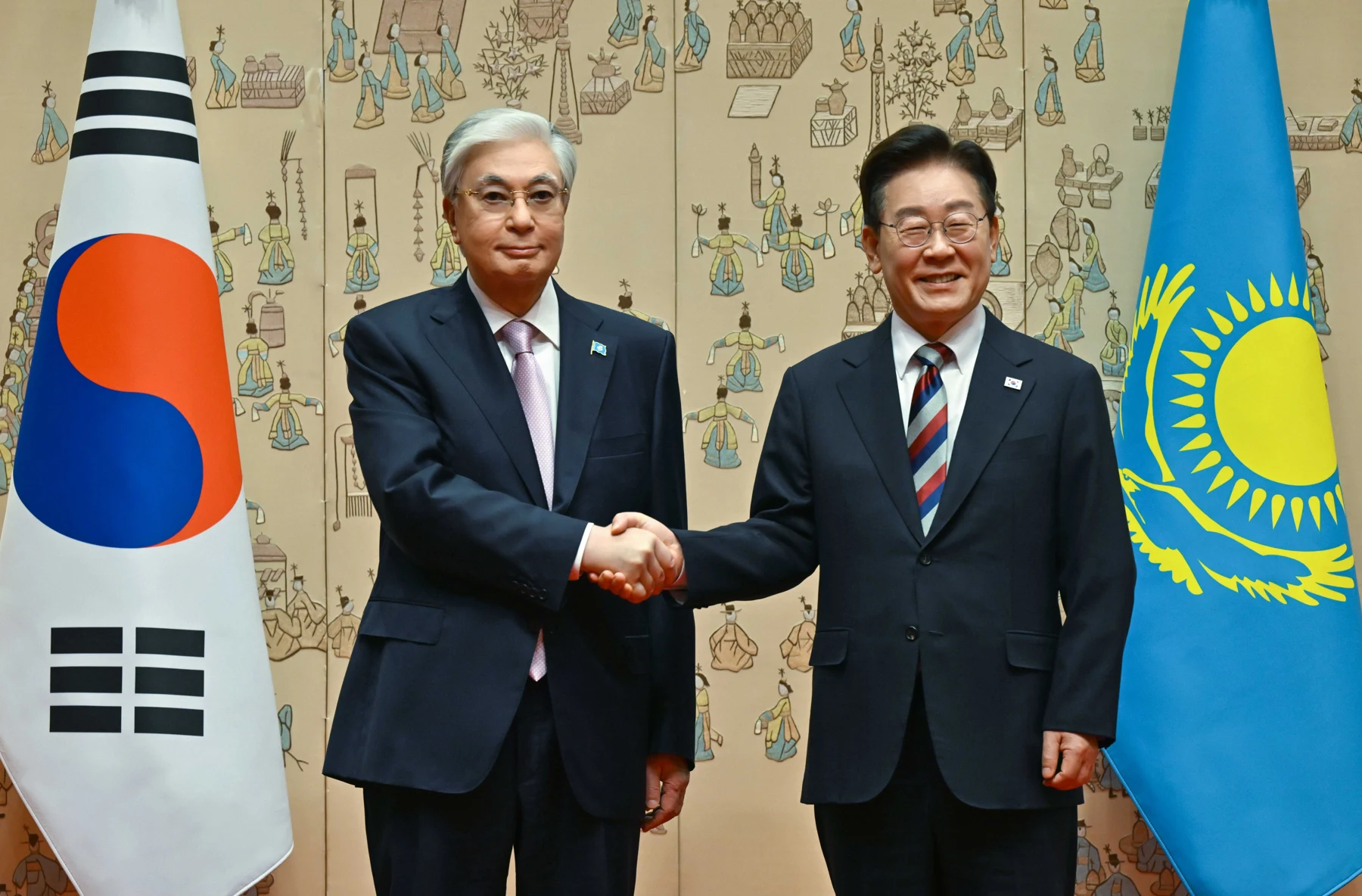
The economic centerpiece of the trip was the Central Asia– Republic of Korea Business Summit. Kassym-Jomart Tokayev noted that the region’s combined GDP had approached $550 billion, while its growth rate had exceeded 6%. Kazakhstan accounts for around 60% of Central Asia’s economy and roughly 70% of foreign direct investment inflows. During the visit, around 80 commercial agreements worth approximately $19 billion were signed. “These are not merely statements of intent… but concrete plans,” the President stressed.
Kazakhstan’s proposed model of cooperation combines the region’s resources with Korea’s industrial, technological and financial capabilities. The countries are already implementing 51 industrial projects worth more than $4 billion. The next step should be deeper localization, including around Hyundai and Kia plants, and the production of higher-value goods.
Among the priorities, the Head of State highlighted full-cycle projects in critical minerals—from geological exploration to deep processing—participation by Korean companies in developing the Middle Corridor, digital technologies and artificial intelligence. Kazakhstan proposed establishing a Central Asia–Korea Center for Advanced Technologies at Alem.ai and, in the agricultural sector, a joint food cluster focused on processing and exports. A Comprehensive Program for Trade, Economic and Investment Cooperation for 2027–2030 will be developed to ensure the systematic implementation of the agreements.
The regional summit was complemented by an extensive bilateral business program. Korea has already invested more than $12 billion in Kazakhstan, where more than a thousand companies with Korean capital operate. Meetings with leaders of KIND, Hyundai Motor Group, Lotte and Hanwha focused on concrete projects, ranging from infrastructure for Alatau City and the production of automotive components and a new Hyundai Tucson model to a gas-processing plant, hotels, medical technologies and digital solutions.
Alatau City emerged as a showcase for the partnership. The Korean side was presented with initiatives involving KIND, KAIST and Korea Airports Corporation: K-Smart Town, education and research infrastructure, digital modeling, artificial intelligence, drones and air taxis. The agreement to open a KAIST branch campus in Alatau strengthens the project’s technological and educational dimensions.
The visit also had an important humanitarian dimension. Kassym-Jomart Tokayev and Cho Jung-sik, Speaker of the National Assembly of the Republic of Korea, visited a Kazakh ethnic village in Seoul’s Hangang Park. The displays included a yurt, the “Zheti Qazyna” installation, traditional crafts and musical instruments. A joint performance of the composition “Friendship” by the Birlik ensemble and the ballet troupe of the State Academic Korean Theatre symbolized the affinity between the two peoples.
The trip demonstrated that cooperation between Kazakhstan and the Republic of Korea now extends beyond trade and individual investment projects. The new partnership model brings together manufacturing, technology, infrastructure and human capital, and its decisive test will be the practical implementation of the agreements reached