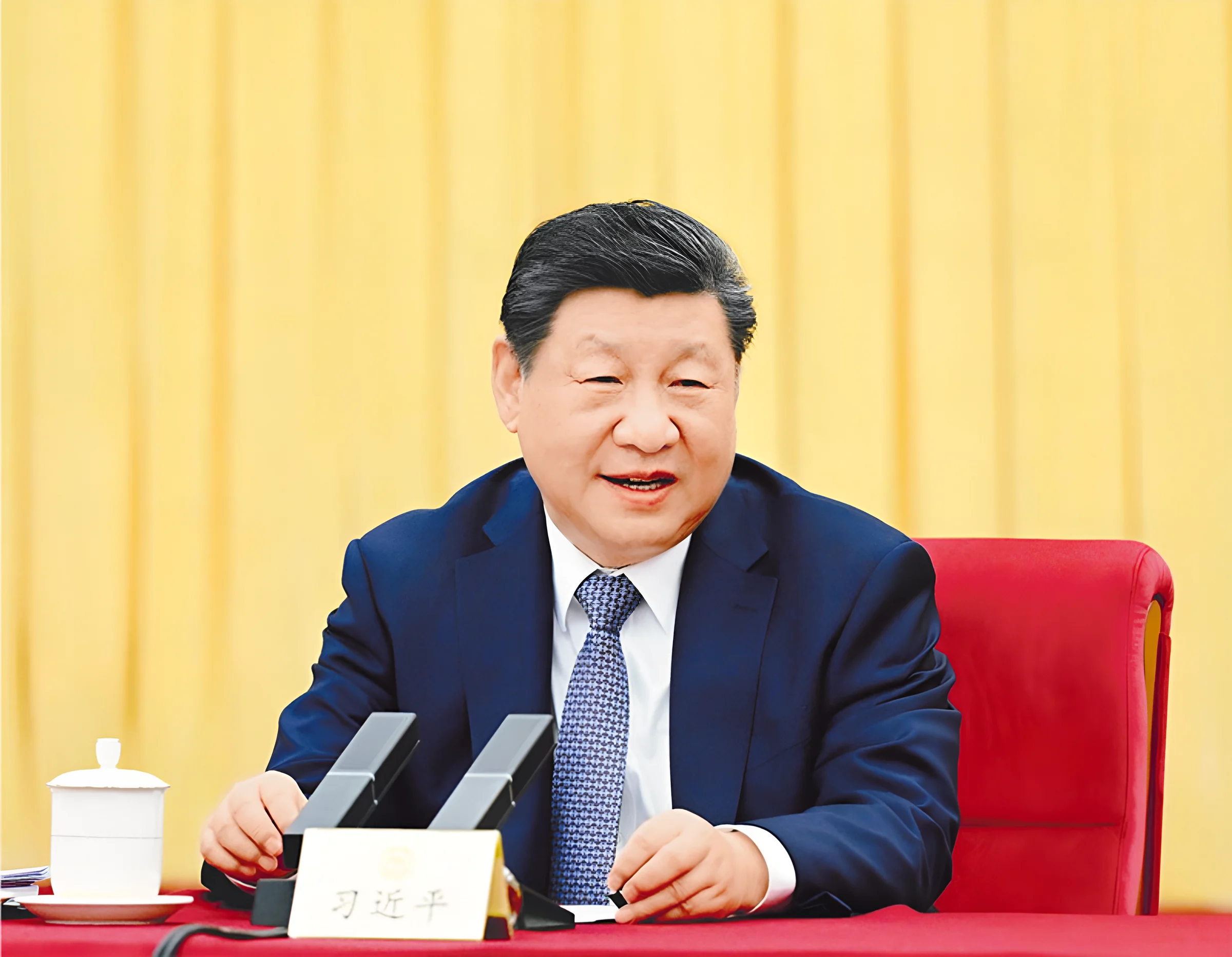
When Xi Jinping addressed a plenary session of the Central Commission for Discipline Inspection of the Communist Party of China on January 12, 2026, many Chinese and foreign analysts expected major announcements. However, instead of unveiling new large-scale initiatives, the president of the People’s Republic of China delivered one of his most concise speeches in recent years. This very restraint was the main signal.
Over more than a decade, China’s anti-corruption campaign has evolved from an extraordinary political initiative into a permanent mechanism of state governance. Today, Beijing is focused less on how to punish the next corrupt official than on how to transform the governance system itself so that the space for corruption gradually diminishes.
From Campaign to Institutions
During Xi Jinping’s first years in power, high-profile investigations of senior Party and military leaders became the principal symbol of reform. The policy of “hunting tigers and swatting flies” demonstrated that no one was untouchable anymore. Yet every campaign has limits to its effectiveness: large-scale investigations can remove specific offenders, but they do not always change the conditions in which corruption arises.
This is precisely why the emphasis shifted markedly in the January speech. Improving oversight institutions became its central theme. The Chinese leadership increasingly invokes the image of an “institutional cage”—a system of laws, procedures, and internal constraints intended not merely to uncover abuses of power but to prevent them before they occur.
This approach reflects an important evolution in state policy. Whereas the fight previously focused primarily on the consequences of corruption, attention is now gradually shifting to its causes.
Corruption as an Issue of National Development
No less revealing is the fact that anti-corruption policy has for the first time been linked so closely to the new 15th Five-Year Plan (2026–2030). Within China’s political logic, the fight against corruption is ceasing to be a stand-alone objective and is becoming part of the country’s modernization strategy.
Beijing regards the effectiveness of state governance as one of the conditions for maintaining high rates of economic growth. Infrastructure investment, the development of high technology, large-scale industrial programs, and implementation of the Belt and Road Initiative require the strictest possible oversight of the use of state resources. The fight against corruption is therefore also becoming economic policy.
Strengthening the Party Hierarchy
Another feature of the January address was its noticeably more frequent emphasis on the authority of the CPC Central Committee. Virtually every major section of the speech was linked to the need for unconditional implementation of the Party center’s decisions.
This suggests that contemporary anti-corruption policy performs two functions at once. On the one hand, it remains a tool for enhancing the effectiveness of state governance. On the other, it contributes to the further consolidation of the Party hierarchy, in which discipline is regarded as a necessary condition for political stability.
It is precisely this dual nature of the campaign that has become the subject of the most vigorous debate among foreign researchers. Some regard it primarily as a tool for modernizing the state apparatus, while others see it as a mechanism for strengthening intra-Party governability. Most likely, both assessments reflect different aspects of the same process.
A New Oversight Architecture
The structure of the anti-corruption system itself is also changing. Whereas investigations of individual cases previously played the central role, Beijing now seeks to integrate the Central Commission for Discipline Inspection of the Communist Party of China, the National Commission of Supervision, judicial authorities, and Party inspection bodies into a single network.
Such coordination allows every case to be handled at every stage—from the detection of suspicious transactions to judicial proceedings and the enforcement of penalties. In Chinese terminology, this is called “integrated supervision”; in practice, it means creating a comprehensive closed-loop system for overseeing the state apparatus.
Particular attention is being paid to sectors where the largest financial flows are concentrated: state-owned corporations, infrastructure construction, the defense industry, and the government procurement system. Corruption risks are considered highest in precisely these areas.
Results: Impressive Figures, Complex Questions
The statistics confirm that the scale of the campaign remains unprecedented. In 2025 alone, discipline inspection bodies investigated more than one million cases, while nearly one million people were held accountable. Inspections continued to target not only mid-level officials but also members of the senior Party, regional, and military elite.
At the same time, the authorities are expanding international cooperation to recover illicitly transferred assets, improving criminal legislation, and paying increasing attention to new forms of corruption emerging in the digital economy.
However, quantitative indicators alone do not provide a complete answer regarding the campaign’s effectiveness. Despite the enormous number of investigations, the country’s leadership continues to acknowledge that corruption remains a serious systemic problem. Moreover, as oversight intensifies, officials are becoming more cautious in making decisions, which sometimes slows the implementation of government projects.
A New Stage in the Chinese Model
The main conclusion from the January plenary session is not that new repressive measures have emerged. Far more important is that China is gradually shifting from the logic of a large-scale anti-corruption campaign toward building a sustainable model of state governance in which oversight becomes an integral element of the political system.
This is precisely why Xi Jinping’s January address proved more important than it might have appeared at first glance. Its outward brevity conceals a shift in emphasis. While the campaign’s first decade was devoted to demonstrating political will, the next will likely be a period of institution-building.
This transformation may determine not only the further development of China’s anti-corruption policy, but also the nature of the entire model of state governance in the People’s Republic of China in the coming years