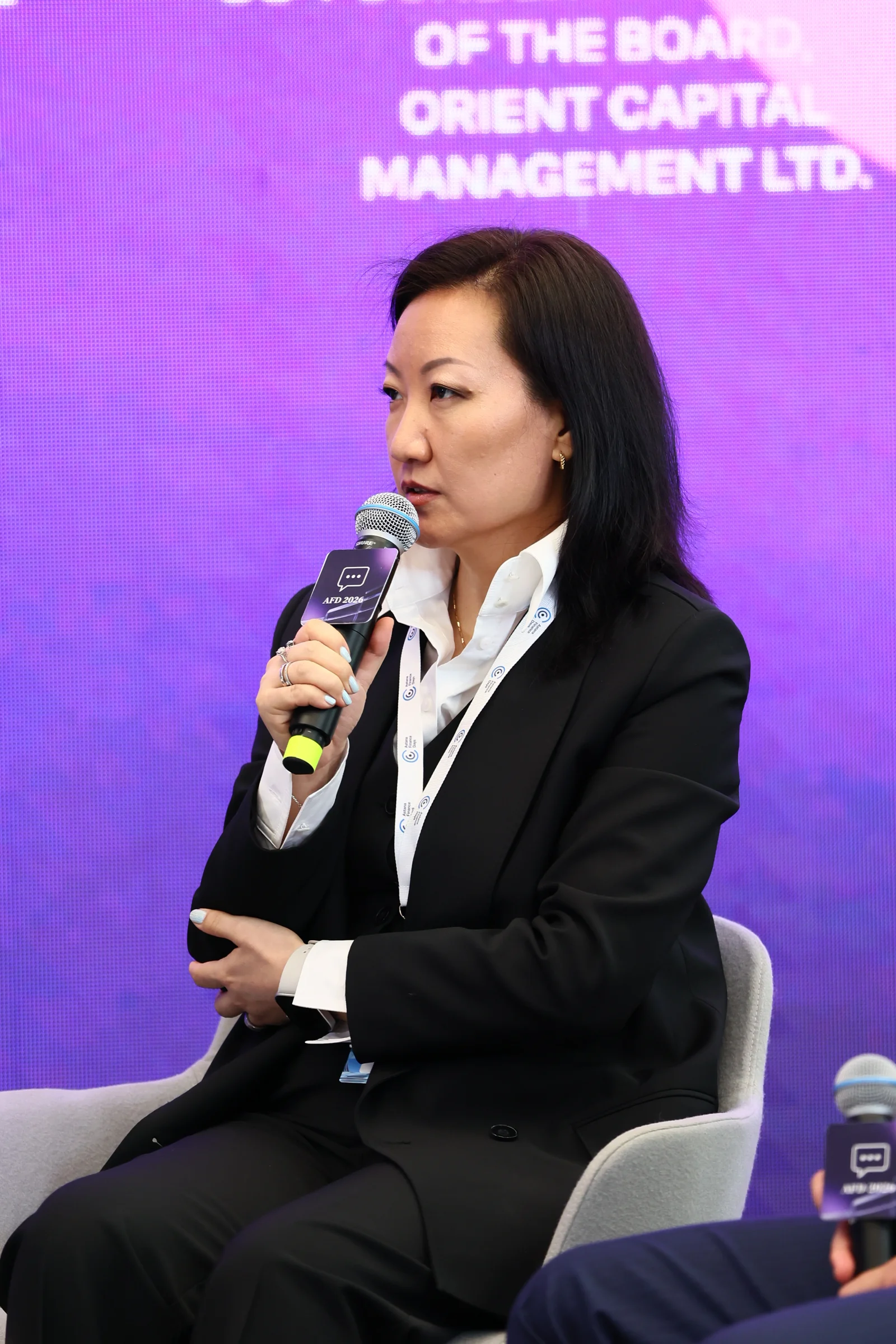
– Your company operates in Kazakhstan and South Korea. What is the main idea behind this cooperation?
– Our overarching ambition, which we are already turning into reality, is to become a bridge between Kazakhstan and South Korea. Today, our management company holds three licenses: Investment Advising, Arranging Deals, and Collective Investment Scheme. The last of these allows us to manage investment funds. This enables both countries to act not only as investors but also as potential providers of investment opportunities for other countries. We strive to create mutually beneficial conditions for raising capital and implementing commercial projects.
– Can investment flows between Kazakhstan and South Korea be considered equal today? Or does the Korean side show greater interest in the Kazakh market?
– Our company currently has several projects at various stages of implementation. These primarily involve attracting foreign capital from South Korea to Kazakhstan and financing specialized commercial projects.
At the same time, we also have a pool of professional clients in Kazakhstan who already invest in the Korean stock market. Through Vitis Korea Fund OEIC, we provide retail, corporate, and professional investors with direct access to the Korean stock market. Therefore, I would not divide these areas into capital exports and imports. The same conditions apply to all participants, and the benefits are mutual. This is a classic win-win strategy.
– In your view, which industries offer the greatest potential for developing investment cooperation between the two countries?
– South Korea, a major importer of oil and gas, is interested in energy, the oil and gas industry, and rare earth metals. Kazakhstan, in turn, is interested in strategic partnerships and infrastructure projects that create added value within the country. Equipment imports naturally stand out as well. South Korea is one of the world’s manufacturing leaders and supplies equipment for a wide range of sectors, including the gas industry.
In addition, Korean companies are actively involved in building nuclear power plants. This area helps optimize power generation costs. Another promising field is petrochemical processing, in which South Korea also has considerable experience.
– What role do the tools offered by the Astana International Financial Centre play in this cooperation?
– As a professional market participant, we are particularly interested in establishing and administering investment funds focused on various areas. Through the AIFC, we can enable potential issuers to raise direct financing from South Korea. This allows us to use the Centre’s infrastructure to develop international investment projects and create new opportunities for promising growth companies.
– What procedures must a Kazakh company complete to enter the Korean stock market?
– The process is fairly complex, but it is clear from the standpoint of international standards and entirely manageable.
First, detailed legal due diligence, including a financial audit, is required. An investment credit rating is also preferred.
All of this applies to debt financial instruments. If we consider other ways of raising financing, the requirements and procedures will differ.
– Which areas and projects deserve particular attention?
– I have worked in the stock market since 2003, and I started my own investment portfolio as a retail investor in 2007. For me, as both a private and professional investor, one of the most compelling themes today is artificial intelligence.
Today, high-speed memory is the new oil. High-speed memory is essential to the development of the artificial intelligence industry, and this is where we see enormous investment potential.
One of the leading companies in this industry is SK hynix. The company holds a significant share of the global high-speed memory market. Over the past eight months, its stock has risen tenfold. As a fairly conservative investor, I find this a very telling example.
– But such growth inevitably raises concerns. How likely is it that this could be another investment bubble?
– The bubble has already burst. We took profits in June, and in June–July the market fell by approximately 30% from the level it had reached.
But it is important to distinguish between two things here: short-term stock-price movements and the industry’s fundamental potential. Artificial intelligence is not limited to software. It also involves equipment, chips, and semiconductors. SK hynix, Samsung Electronics, and other major manufacturers operate in this field.
We see Google, Amazon, Microsoft, and other technology companies investing enormous sums in the development of this industry. I therefore believe that interest in memory and semiconductors has a long-term foundation.
– Can the current investment potential of Korean technology companies be compared with that of the oil and gas industry in the past?
– Yes. If we had bought shares in ExxonMobil or Chevron thirty years ago, we would have invested in the industry that defined the economy of its time. Today, companies involved in memory and semiconductor manufacturing may play a similar role. This is a long-term investment thesis grounded in fundamentals supported by the development of artificial intelligence and growing demand for computing power.
At the same time, we must remember that the memory market is cyclical. New players will emerge, and competition will intensify. We cannot expect stock prices to rise indefinitely.
– You speak of the fundamental potential of Korean companies. But how should risks be assessed in such a rapidly growing market?
– Investors must understand that growth cannot continue indefinitely. It is important to distinguish a company’s fundamental value from market hype.
In the Korean market, we have seen professional investors make money both when stocks rose and when they fell. Those who lost money were the ones who saw the rapid growth and decided it would continue forever.
Ultimately, a fair price reflects the true state of affairs, even if it does so with some delay.
– How would you compare the investment climates in South Korea, Japan, and China?
– In terms of the outlook for 2027, I would rank South Korea first among these three markets, Japan second, and put China aside for now.
The situation in China remains mixed. We see an economy burdened by excessive debt, problems in the real estate sector, and structural difficulties that have accumulated over the years. It is not yet clear whether the market has bottomed out. I therefore would not rush to invest in Chinese assets. We may yet see new historic lows.
South Korea, by contrast, is showing strong momentum. In the first two quarters of 2026, the country posted a record foreign trade surplus. This indicates the significant potential of its economy.
– What sources of information do you rely on when making investment decisions?
– I always recommend that those who are genuinely interested in the stock market begin with primary sources. They should read and analyze companies’ financial statements, monitor corporate events, and assess business prospects. Every company has a strategic and operating plan that it communicates to the market. Each quarter, we can compare the planned figures with the actual results. If profits exceed expectations, this is reflected in the stock price. If the company fails to meet its plan, the market reacts as well. Everything is interconnected. This is what distinguishes stock investing from certain other instruments, such as cryptocurrencies, where it can be more difficult to determine exactly what is driving an increase or decrease in value.