“At the time, Aktogay was considered simply too big to undertake,” recalls Oleg Novachuk, Chair of the KAZ Minerals Supervisory Board. “There were not yet any mills large enough to process such volumes of ore.”
Today, those words sound almost unbelievable. Yet it was technological constraints that once cast doubt on the future of one of Kazakhstan’s largest copper projects.
Nine Votes Against
The story of Aktogay could have ended before it even began. In 2009, the proposed development was submitted to the company’s board of directors for consideration. Nine of the eleven board members voted against it.
“There were two major questions: where we would find that kind of money and whether the company could handle a project of such scale,” says Oleg Novachuk. “Nine members of the board of directors voted against it, and only Vladimir Kim and I voted in favour of the project.”
Today, this story is seen as a striking chapter in a successful corporate legend. At the time, the future of the entire company was at stake. Reversing the board’s decision required months of work, the involvement of international experts, the search for financing solutions and the creation of a world-class project team. Ultimately, Aktogay brought together specialists from Chile, Australia, Canada, South Africa and many other countries—people who had previously worked on the world’s largest mining projects.
“We assembled a team of leading specialists in various fields from 16 different countries,” recalls Oleg Novachuk. This marked the beginning of a project that was destined to transform Kazakhstan’s mining industry.
From the Steppe to the Ranks of Global Leaders
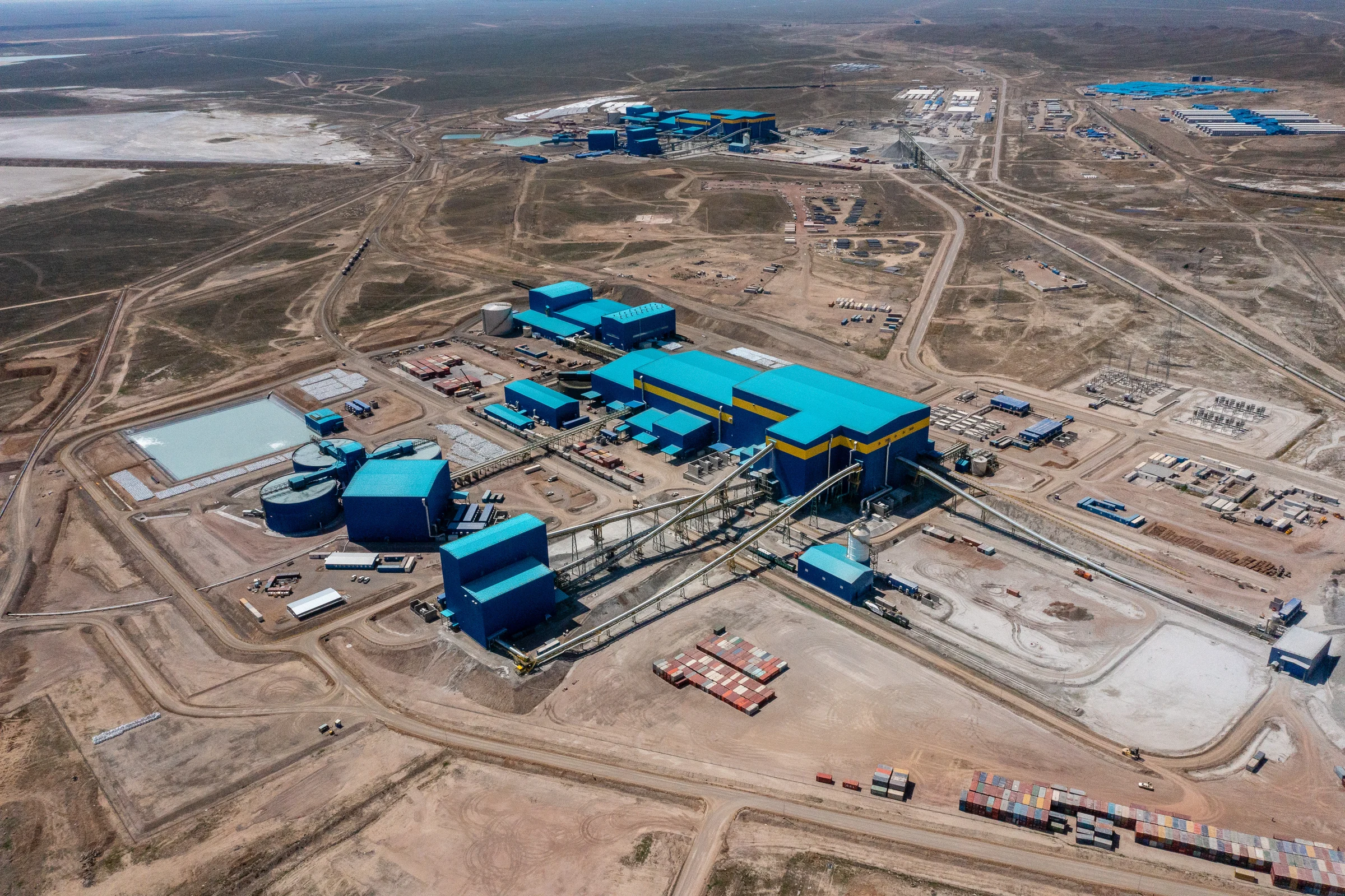
Construction began in 2013. In what is now Abay Region, far from major industrial centres, a modern, world-class production complex gradually began to take shape. First came the roads and foundations. Then came the buildings for the future concentrators, power transmission lines and tens of thousands of tonnes of equipment.
The first sulphide concentrator was commissioned in December 2016. The second began operating in 2021. In a relatively short period, Aktogay became one of the world’s largest copper mines. Production is currently planned through 2047. Remaining ore reserves are estimated at approximately 1.4 billion tonnes, and the operation remains one of the key assets of KAZ Minerals Group.
“Just ten years ago, there was nothing here. Today, we see one of the most successful and efficient copper production operations not only in Kazakhstan, but anywhere in the world,” says Andrei Tretyakov, Group Chief Executive Officer of KAZ Minerals. For him, Aktogay’s significance extends far beyond operational performance: “It means job creation, taxes and technology transfer. At Aktogay, we use some of the most advanced technologies available anywhere in the world.”
World-Scale Production
Behind the bare figures lies an engineering complex of impressive scale. The mine operates mining haul trucks with payload capacities of up to 240 tonnes, some of the largest crushing plants, one of the world’s largest semi-autogenous grinding mills and two giant ball mills. Its production capacity enables it to process tens of millions of tonnes of ore annually.
However, Aktogay’s principal achievement lies not in the size of its equipment, but in its efficiency. In recent years, the operation has consistently performed above design levels. In 2025, it processed more than 62 million tonnes of ore, one of the best results in the global mining industry. Both concentrators are operating at approximately 30% above design throughput.
“This truly is a world record,” notes Anthony Todd, Chief Operating Officer of KAZ Minerals Group. “According to my industry colleagues, such performance at concentrators was virtually unheard of.”
Yet the secret to this success was unexpected. “I always tell the operators: stability is good. Keep the process running steadily. That is exactly how we achieved this result,” says Todd.
Behind this simple principle lie years of engineering work, technological improvements, and a culture of continuous improvement.
Where Technology Meets the Future
Today, Aktogay is more than just a major mine. It is one of Kazakhstan’s most technologically advanced production sites. Machine vision systems, big data analytics, digital production management platforms, and artificial intelligence solutions are used here. AI helps analyse vast volumes of production data, identify patterns, and improve process efficiency.
“Today, AI already allows us to review a year’s worth of daily reports and quickly identify trends and patterns,” says Reinhardt Viljoen, General Director of KAZ Minerals Aktogay LLP.
But even the most advanced technologies do not diminish the role of people. “It is very important for an engineer to verify the conclusions drawn by AI and ensure that they are technically sound,” Viljoen emphasises.
That is why Aktogay is now becoming not only a production site, but also a centre for developing new capabilities for domestic industry.
“The history of Aktogay clearly shows that development cannot be halted at any one point. Implementing this project once required capabilities that were virtually unavailable off the shelf. They had to be brought together, developed, and transferred. Today, the situation is repeating itself at another level: technologies, digital solutions, and approaches to production are changing—and our people must develop alongside them. That is why continuous learning and knowledge sharing are not a separate HR initiative for us, but part of our corporate culture and the long-term development of the business,” says Aizhan Balabatyrova, Chief Executive Officer of KAZ Minerals Management LLP.
This approach is particularly important for operations working on a multi-decade horizon. Technologies change and new production challenges emerge, but a company’s ability to develop is determined primarily by how quickly its people develop along with them.
The Metal of the New Economy
Copper is becoming one of the key resources of the 21st century. Electric vehicles, renewable energy, data centres, artificial intelligence, and digital infrastructure require ever-increasing amounts of this metal. Analysts estimate that global copper demand could exceed 40 million tonnes per year in the coming years.
“Since the Bronze Age, copper has always accompanied humanity,” says Andrei Tretyakov. “We are now in the era of digital technologies and artificial intelligence, and it is impossible to imagine this world without copper.”
Today, KAZ Minerals accounts for approximately 1.5–1.6% of global copper production and is the largest producer of the metal in Kazakhstan.
According to Andrei Tretyakov, partners’ attitudes toward the company have also changed: “They used to ask us how much copper we would produce and what the production cost would be. Now the questions are different: can we become a long-term supplier for 10, 15, or 20 years? We are no longer simply a supplier of raw materials. We are becoming a strategic partner.”
The People Behind the Big Number
One and a half million tonnes of copper cannot be seen. That figure cannot fit into a single open pit, warehouse, or report. But it can be envisioned in thousands of kilometres of power transmission lines, millions of electric vehicles, hundreds of data centres, and technologies shaping the future of the global economy.
“There is a little bit of Aktogay in all these things,” says Andrei Tretyakov.
And yet, when speaking about this milestone, the operation’s leaders return time and again to one subject: people.
“One and a half million tonnes—this is our victory. It demonstrates the calibre of the people who work here,” says Oleg Novachuk.
“The most important part of this success is the people of Aktogay,” Reinhardt Viljoen says with conviction.
“I truly believe that one and a half million tonnes is an achievement made possible by our people,” adds Anthony Todd.
Perhaps that is the main significance of today’s achievement. Aktogay was once considered a deposit too challenging to develop. Today, it is one of the symbols of Kazakhstan’s modern industry, proving that the country can deliver world-class projects, implement advanced technologies, and develop professionals whose expertise is in demand worldwide. And by all indications, this is only the beginning.
“Development will never end as long as we have people like these,” says Oleg Novachuk. “While we are building one project, we already have ideas for the next.”
One and a half million tonnes of copper is not the end of Aktogay’s story. It is simply a story that can no longer be overlooked.