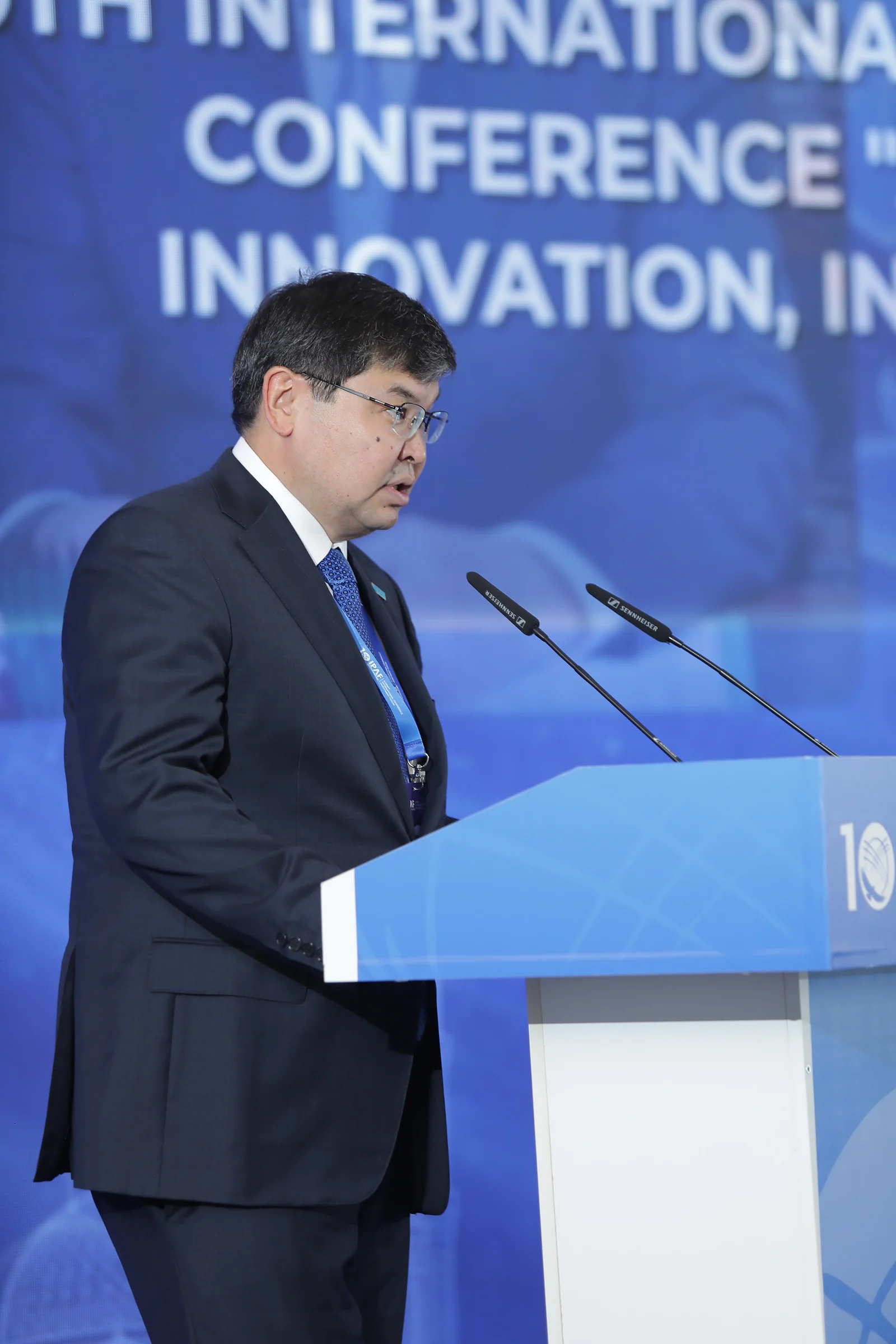
– Mr Takiyev, why do distressed assets matter today not only to banks but also to the economy as a whole?
– Distressed assets are capital that, for various reasons, has ceased to function fully in the economy. They may represent production facilities, real estate, land plots, or operating businesses. The issue is therefore not only debt resolution, but also how effectively this economic potential can be returned to circulation.
In Kazakhstan, this work is being carried out systematically, with the Government of the Republic of Kazakhstan, the National Bank of Kazakhstan, and the Agency of the Republic of Kazakhstan for Regulation and Development of the Financial Market acting within their respective remits. The Ministry of Finance represents the state as a shareholder of the Fund of Problem Loans JSC, which directly manages the assets transferred to it.
The principle is clear: obligations must be fulfilled, and assets must work. Traditional debt recovery tools are complemented by professional management, the restructuring of viable projects, and market-based asset disposal.
At the same time, a decision on business rehabilitation should not be made for the sake of preserving a particular owner. It should be based on an objective assessment of business viability and be economically justified, including by providing a greater recovery than the liquidation or sale of the asset.
– What has Kazakhstan already done to develop the distressed asset market, and what practical results has this produced?
– In recent years, Kazakhstan has established the necessary legislative and institutional framework for the distressed asset market. The pool of potential buyers has been expanded, conditions have been created for private investor participation, and digital asset disposal mechanisms have been introduced. This work is being carried out by government authorities and financial regulators within their respective remits.
As for the results achieved specifically by the Fund of Problem Loans JSC, in which the Ministry of Finance represents the state as a shareholder, we can already assess a very tangible economic impact.
Since the rehabilitation measures began, the Fund has secured the recovery of around 170 billion tenge. In addition, between 2020 and 2025, debtor enterprises paid around 84 billion tenge in taxes and safeguarded more than 9,000 jobs.
I would also like to highlight the socio-economic impact. Agricultural producers account for a significant share of the portfolio of businesses undergoing rehabilitation. In 2025 alone, they conducted agricultural operations across approximately 1.34 million hectares, harvested about 2.1 million metric tons of crops, and safeguarded more than 7,600 jobs in rural areas.
For us, this is an important measure of effectiveness. The objective is not simply to recover debt or dispose of property.
– You have referred to a market-based approach. What do investors need for distressed assets to become fully fledged investment opportunities?
– First and foremost, transparent rules, reliable information about the asset, clear pricing, and a competitive disposal process.
Kazakhstan has already moved beyond establishing the basic infrastructure to developing it further. In October 2024, the Agency of the Republic of Kazakhstan for Regulation and Development of the Financial Market issued the first authorization to operate an electronic trading platform for the sale of bank and microfinance assets. The first lots of distressed assets from banks and distressed asset management companies have already been listed on the DMAS digital platform. The focus today is therefore no longer on creating digital infrastructure from scratch, but on scaling it up, supplying it with high-quality assets, and improving the efficiency of auctions.
Digitalization is crucial here. It broadens the pool of potential buyers, improves pricing transparency, and minimizes subjectivity in asset disposal.
Legislation has also expanded opportunities for private capital participation, including by non-residents. At the same time, investors are granted access exclusively within the limits established by law, with due regard for borrowers’ rights and applicable restrictions. Consumer loans and other problem loans to individuals cannot be sold to private investors. This option is available for loans to legal entities, as well as loans to individuals for business purposes.
Our objective is therefore to develop a market that simultaneously safeguards investors’ interests, borrowers’ rights, and the state’s economic interests.
– A dedicated Investment Forum was held for the first time under the International Public Asset Management Company Forum (IPAF). How do you assess its practical significance?
– The Forum was an important step in gradually moving international cooperation in this area from exchanging experience to more practical engagement.
A key feature of the program was a dedicated Investment Forum. It enabled asset holders, asset management companies, and prospective investors to discuss specific proposals and better understand each other’s requirements.
We assess the Forum’s practical significance not only by the number of agreements reached during the event itself. Equally important, the Forum created opportunities for direct contact between asset owners and investors, helped identify genuine investor interest, and laid the groundwork for further evaluation of specific assets. In addition, the discussions provided a better understanding of the information and terms the market requires to make investment decisions.
One area of discussion concerned compatible approaches to information disclosure, asset classification, and the use of digital trading mechanisms.
The International Public Asset Management Company Forum (IPAF) remains a platform for continuing this work. At the same time, any cross-border mechanisms must be developed in accordance with each country’s national laws. The focus remains on discussing possible approaches, rather than creating a single supranational system.
– In 2026, the Fund of Problem Loans JSC holds the chairmanship of the International Public Asset Management Company Forum (IPAF). What practical benefits does this bring Kazakhstan?
– For us, the Fund’s chairmanship of the International Public Asset Management Company Forum (IPAF) is an opportunity to move international cooperation onto a more practical footing. It enables us to develop new investment contacts, prepare a high-quality offering of Kazakhstan assets for the market, and discuss compatible requirements for information disclosure and digital trading.
The Forum held in Astana brought together representatives of international financial institutions, central banks, government authorities, asset management companies, and the professional community. For Kazakhstan, it provided an opportunity to present its own experience and establish direct links between domestic market participants and prospective investors.
Ultimately, the purpose of this work is to give economically viable assets an opportunity for recovery and development, while providing the remainder with a transparent market-based disposal mechanism. This returns non-performing capital to economic circulation, where it can once again create value.